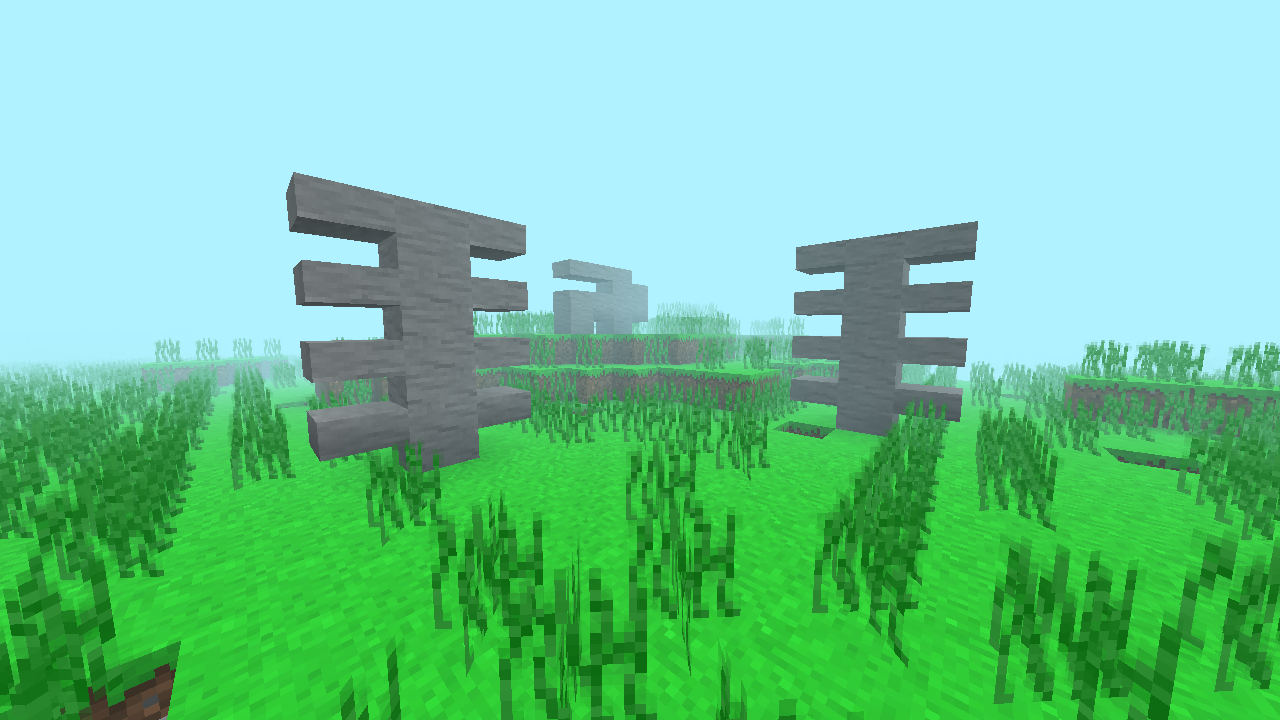
About
What Voxelius is, and where it came from.
Voxelius is a sandbox voxel game and engine in one tree, written in C++23. The engine is not a library that a separate game uses: the client and the server are the game, and the content that ships with them is a mod like any other.
The project is in development. The public tree is the third rewrite of the engine, and the game and its content grow together with it. Nothing here is stable yet: the formats, the Lua API and the network protocol still change.
History
Voxelius as a concept dates back to 2021.
2021: it was not always a voxel-ius
I had nothing else to do during lockdown and lecture times at university. I started experimenting with OpenGL 4.6 and C++17. The idea was to draw objects with a single draw call and figure out their contents in a fragment shader.
What came out was a simple 2D engine. It used Box2D for physics, could play .xm modules (without streaming), and rendered the world in four draw calls.
2021: voxelius historic
Then the voxel itch came back. I stripped the 2D rendering and started from scratch.
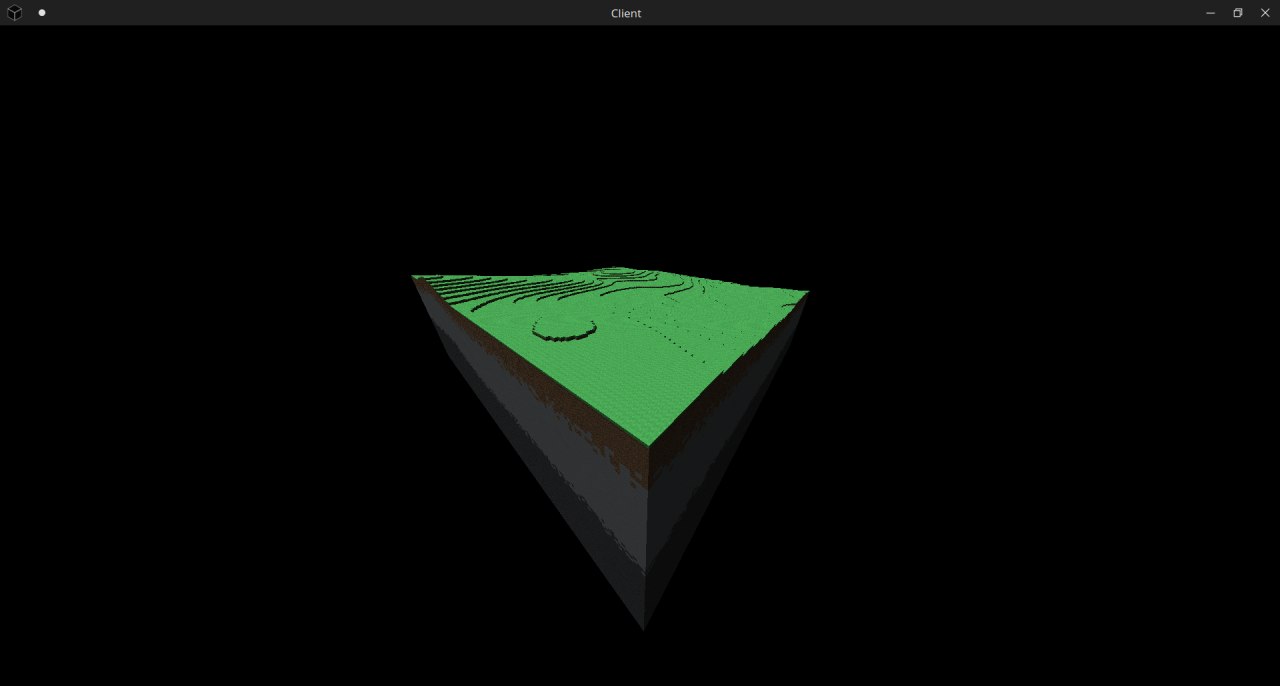
I first defined some structures and made a basic renderer. It only drew colored voxels, with a color per side:
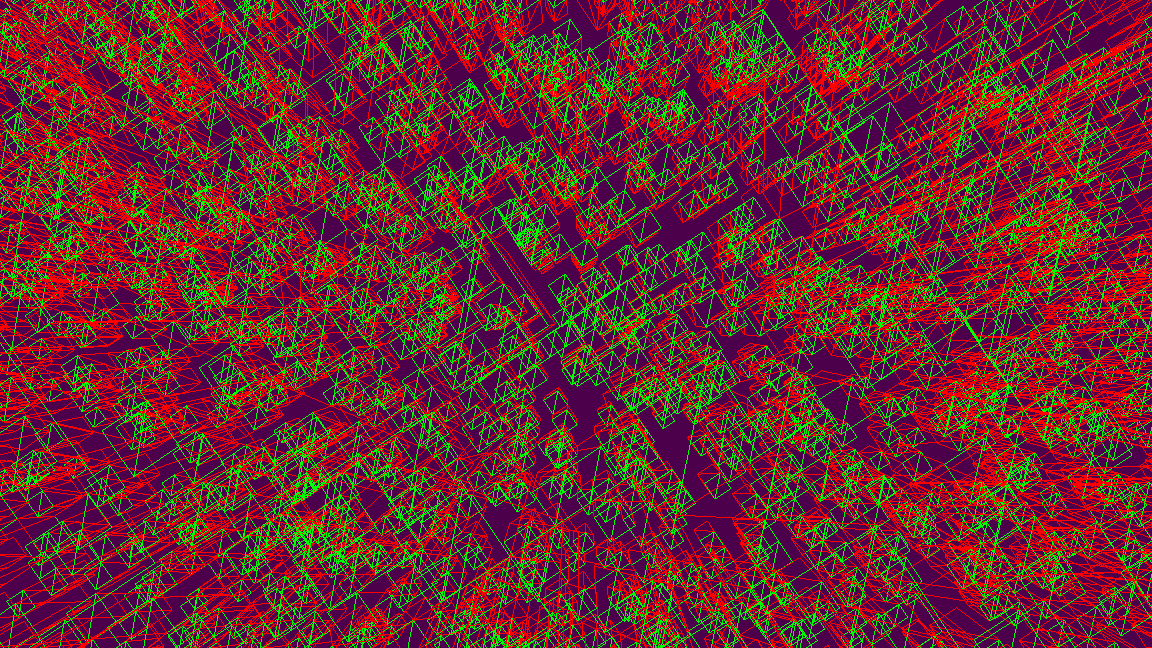
This is the first image captured of Voxelius rendering anything. I made it in RenderDoc and originally placed it in the repository root as
rd0.png. That first image still appears in web and installer media. It is something of a tradition at this point.
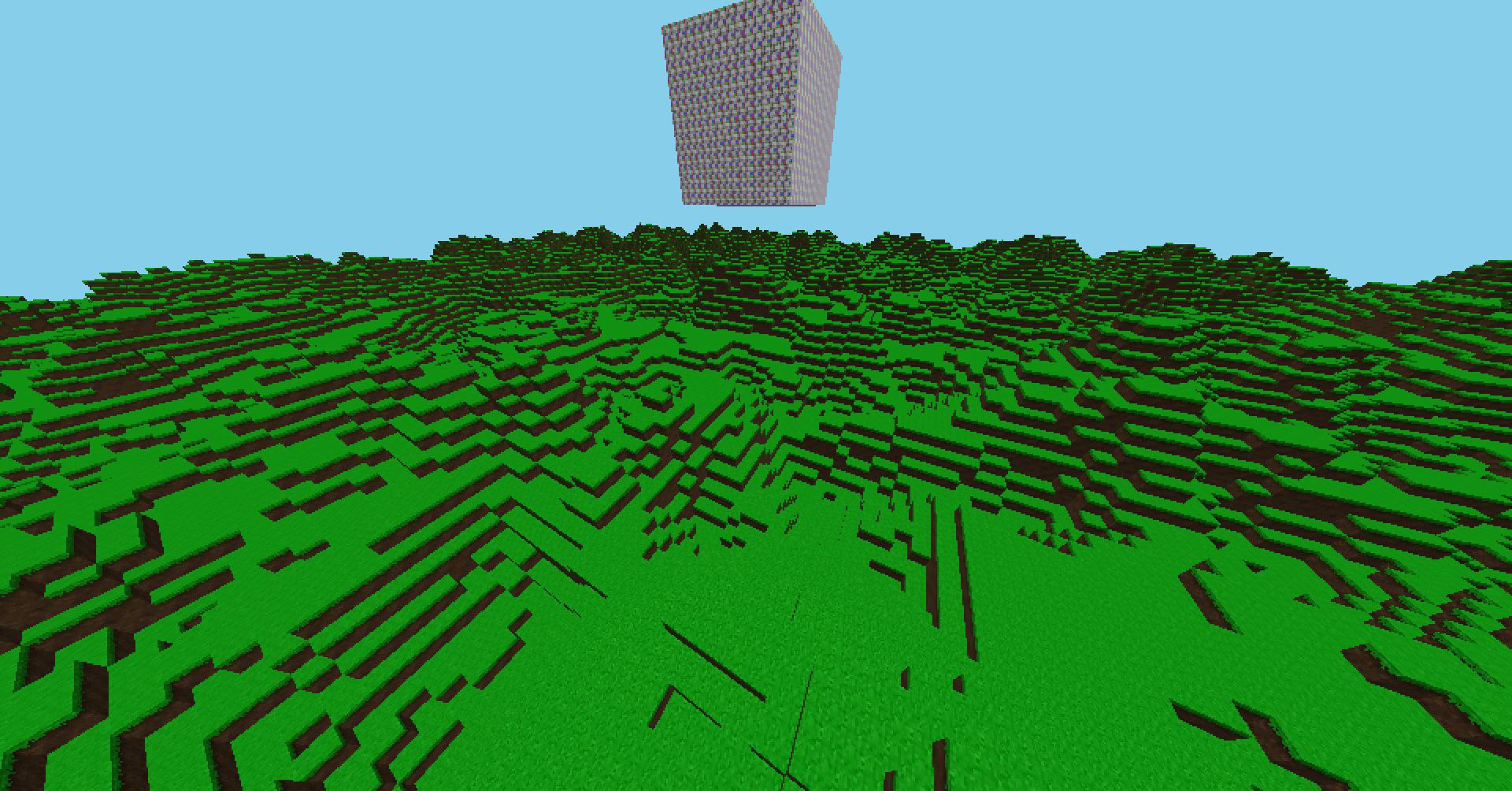
Then came textures. The choice was unorthodox, but that is what I had on my drive:
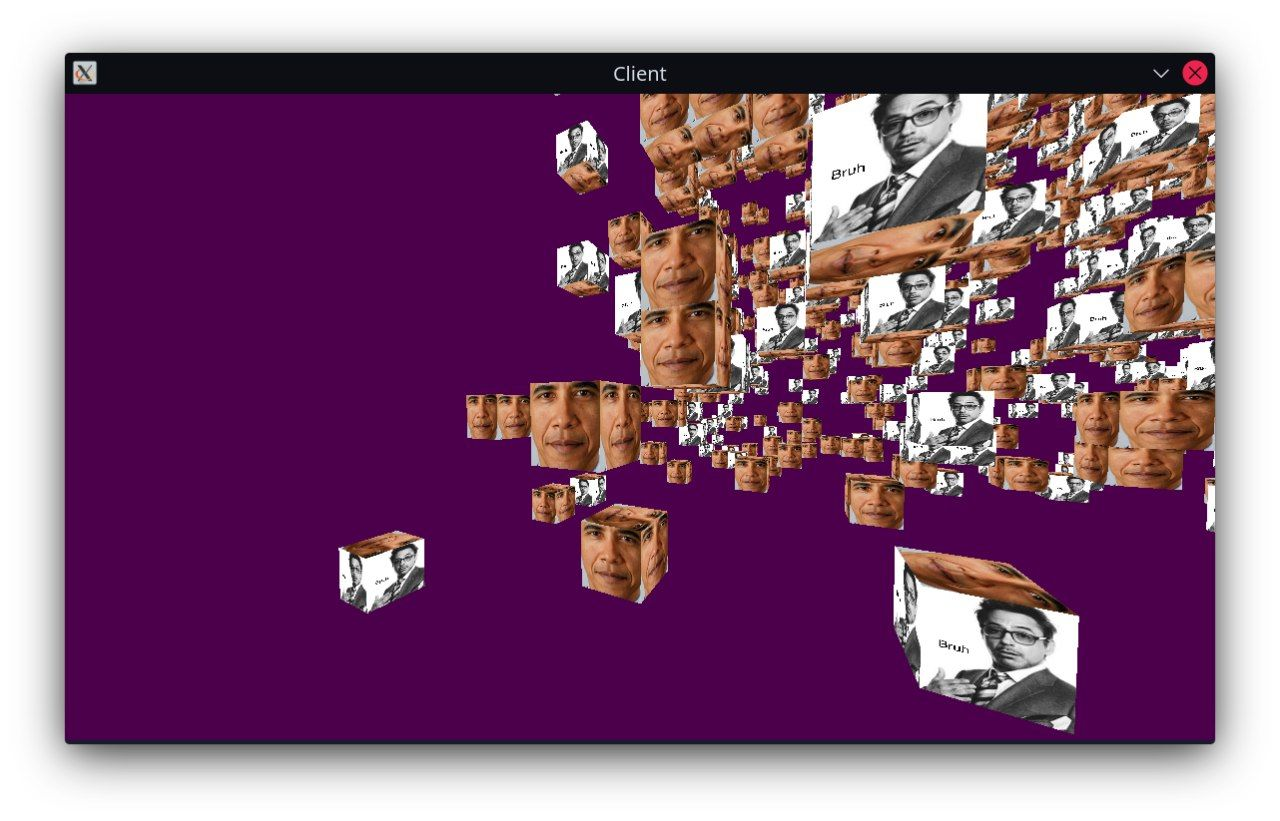
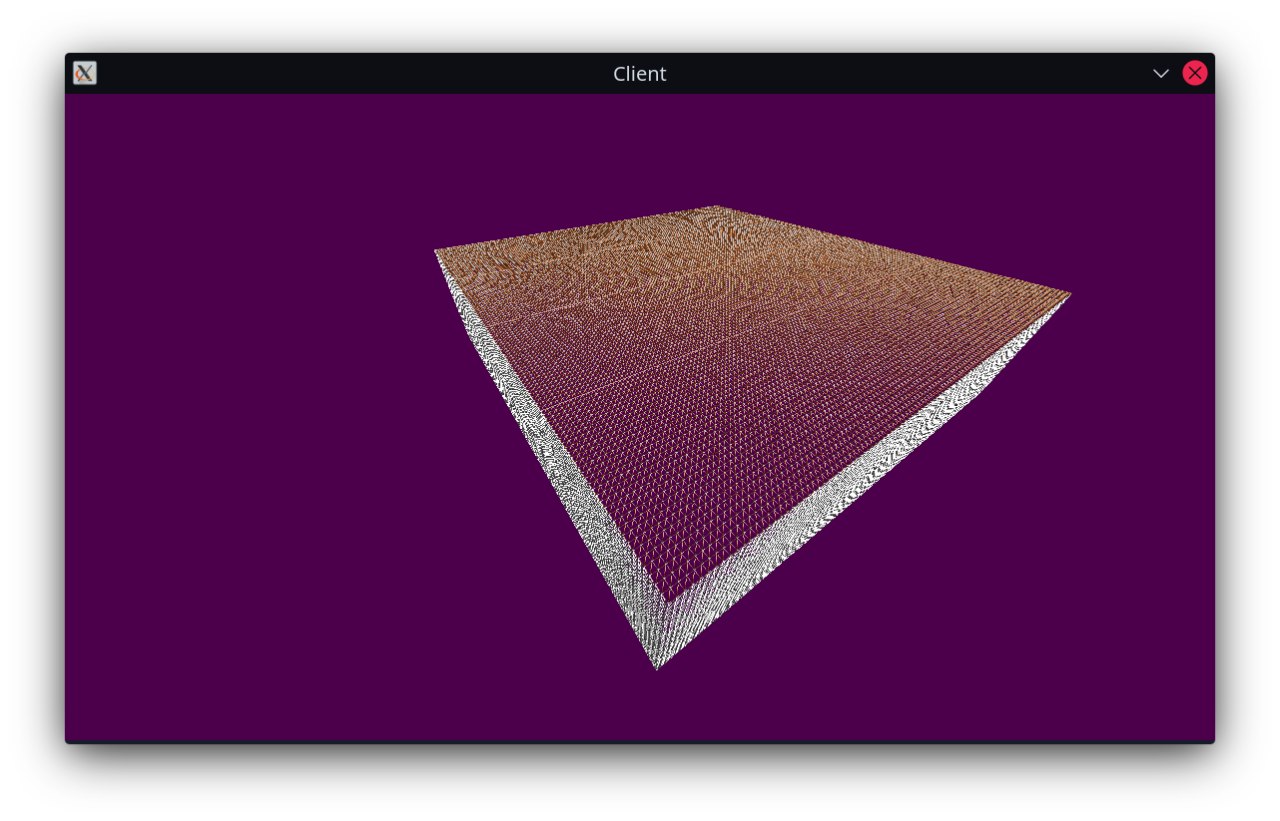
Eventually greedy meshing, shadows, and rudimentary networking landed. By then the code was practically unmaintainable.
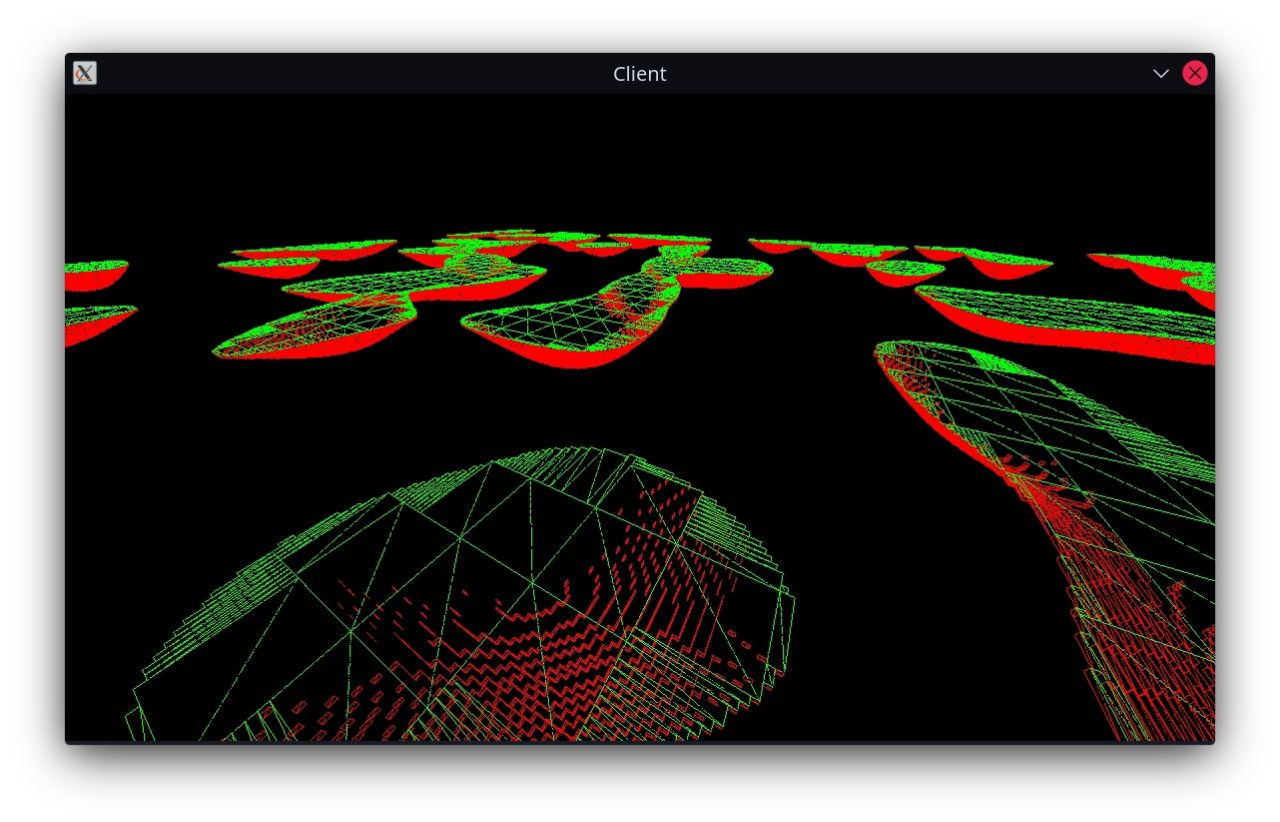
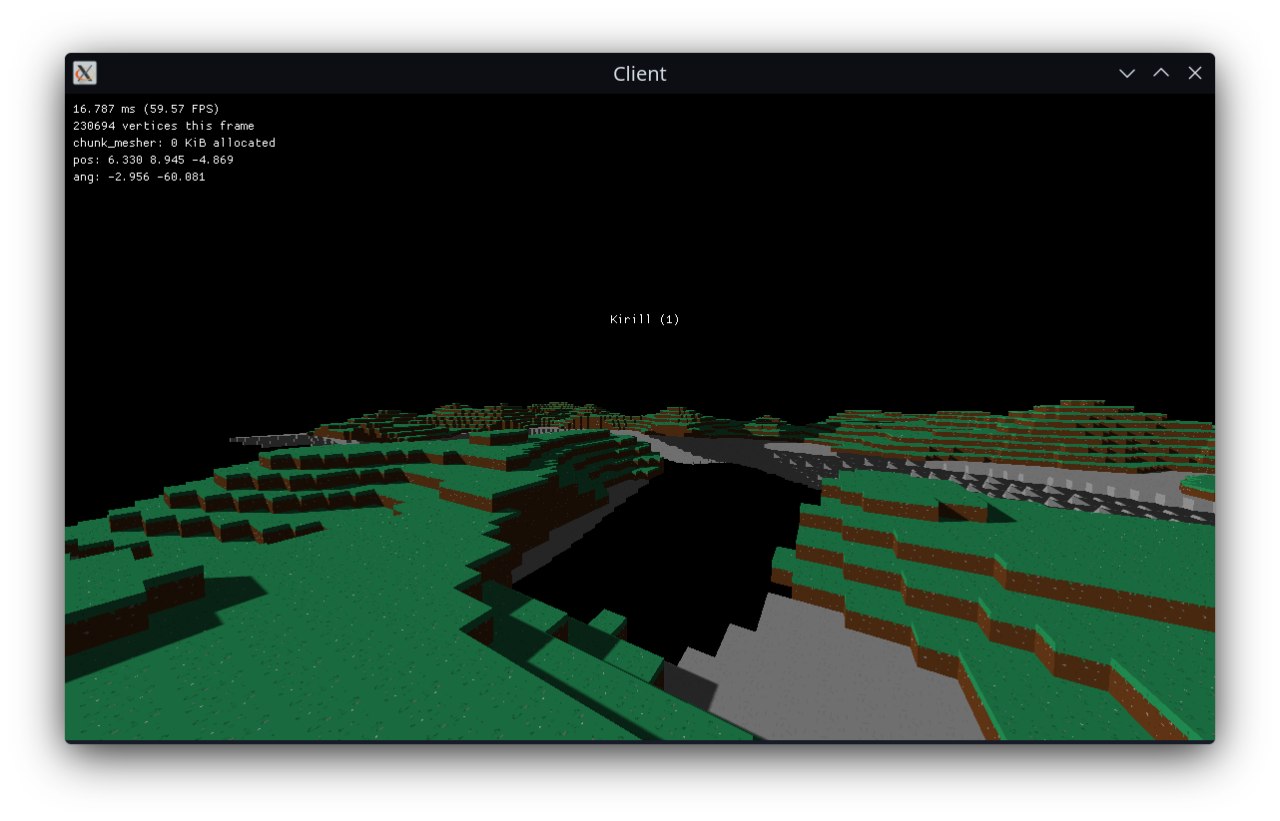
2022-2023: voxelius modern
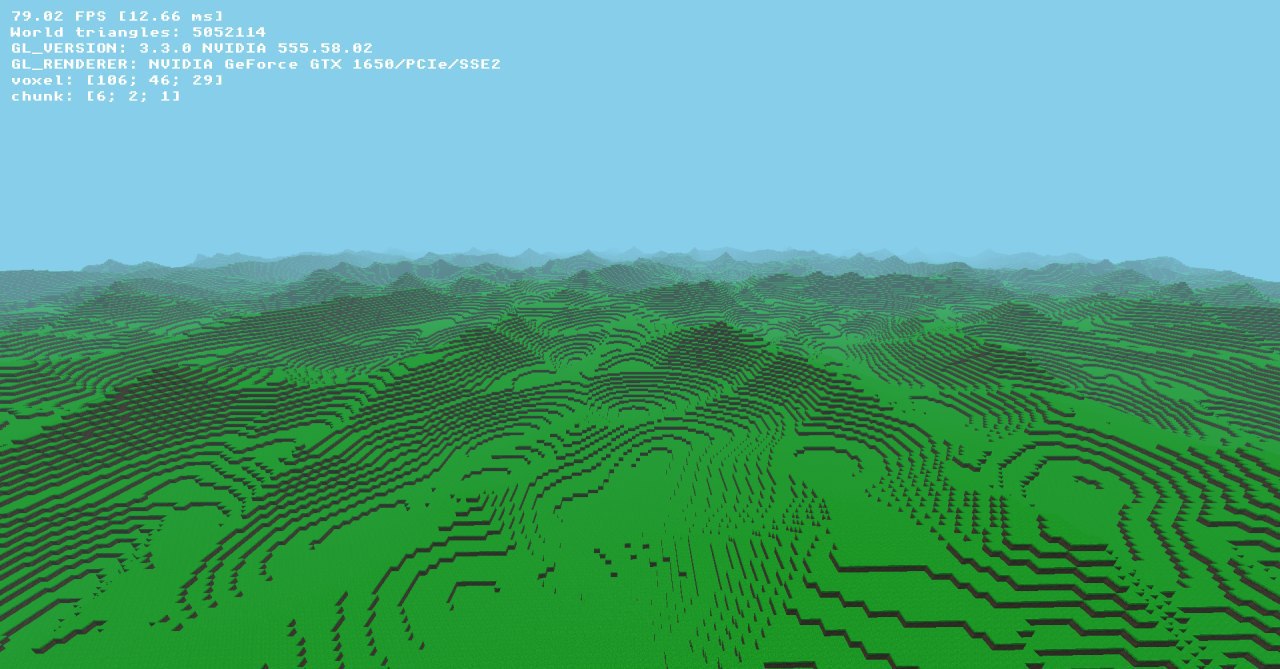
Nothing particular. Some performance work, better threading, and a lot of doing nothing because 2022 was hard on the IRL side of things. Some experimental world generation showed up later.
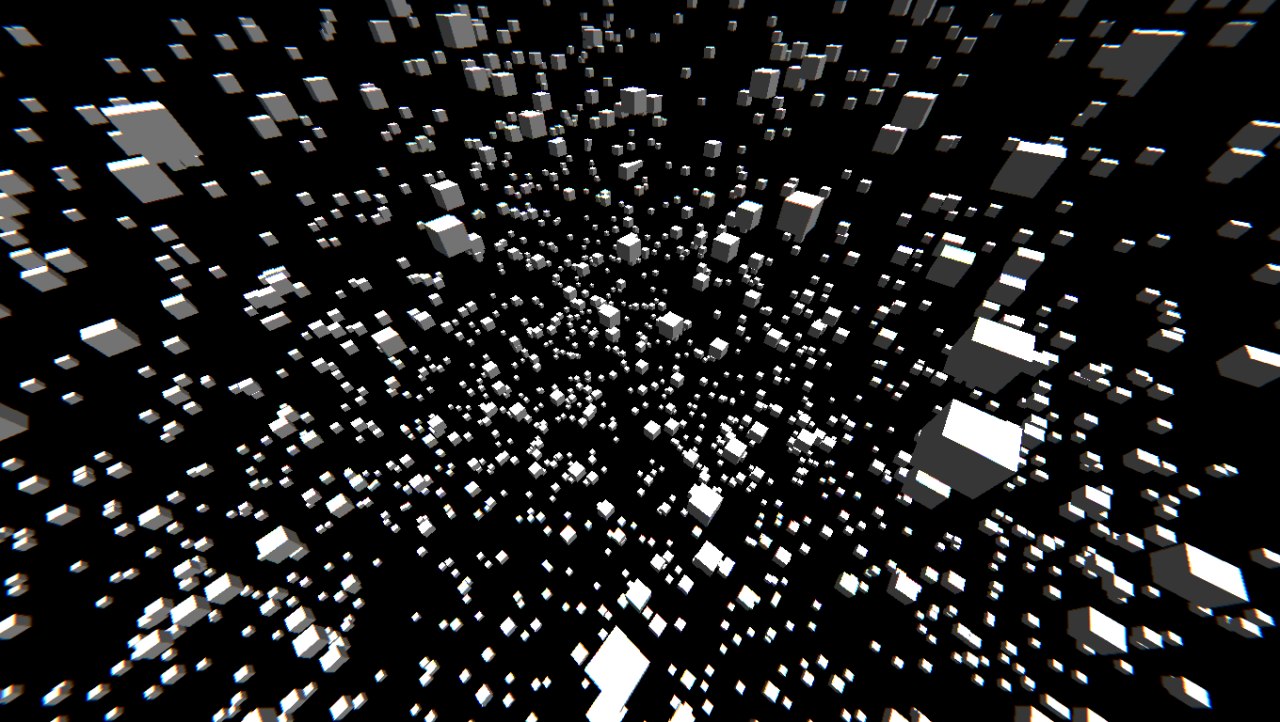
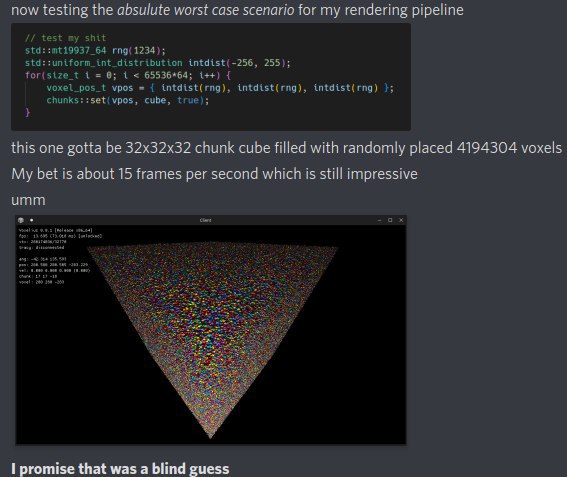
2024-2025: large progress
In 2024 Voxelius landed me my current software job because it impressed the lead programmer. Hobby projects sometimes pay off.
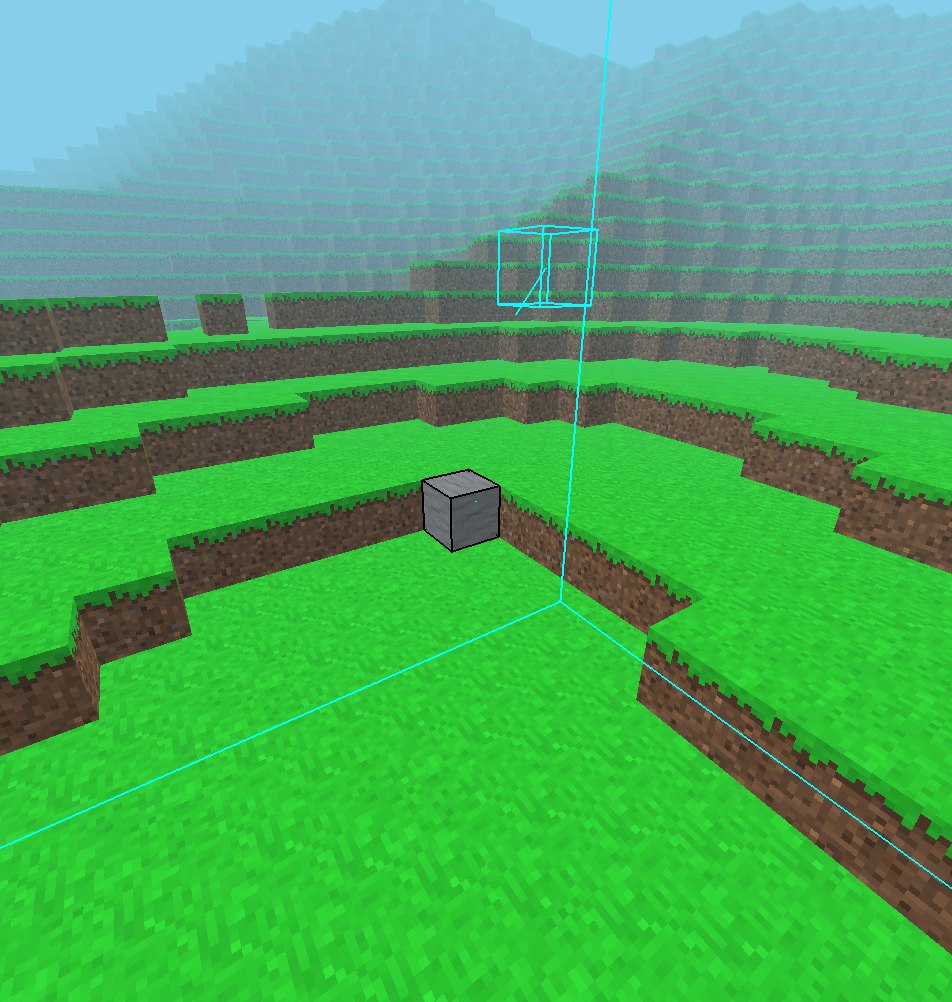
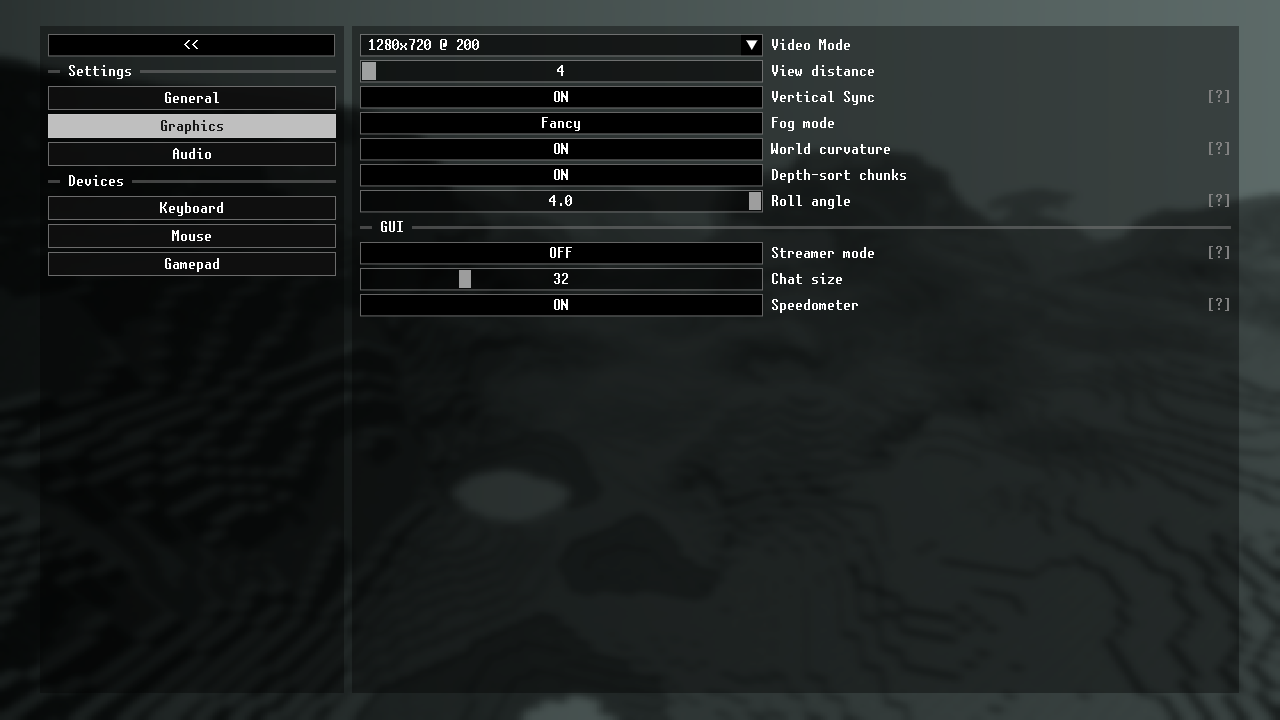
This period brought voxel interactions (break/place), decent world generation, feature placement, multiplayer, and a GUI that was usable.
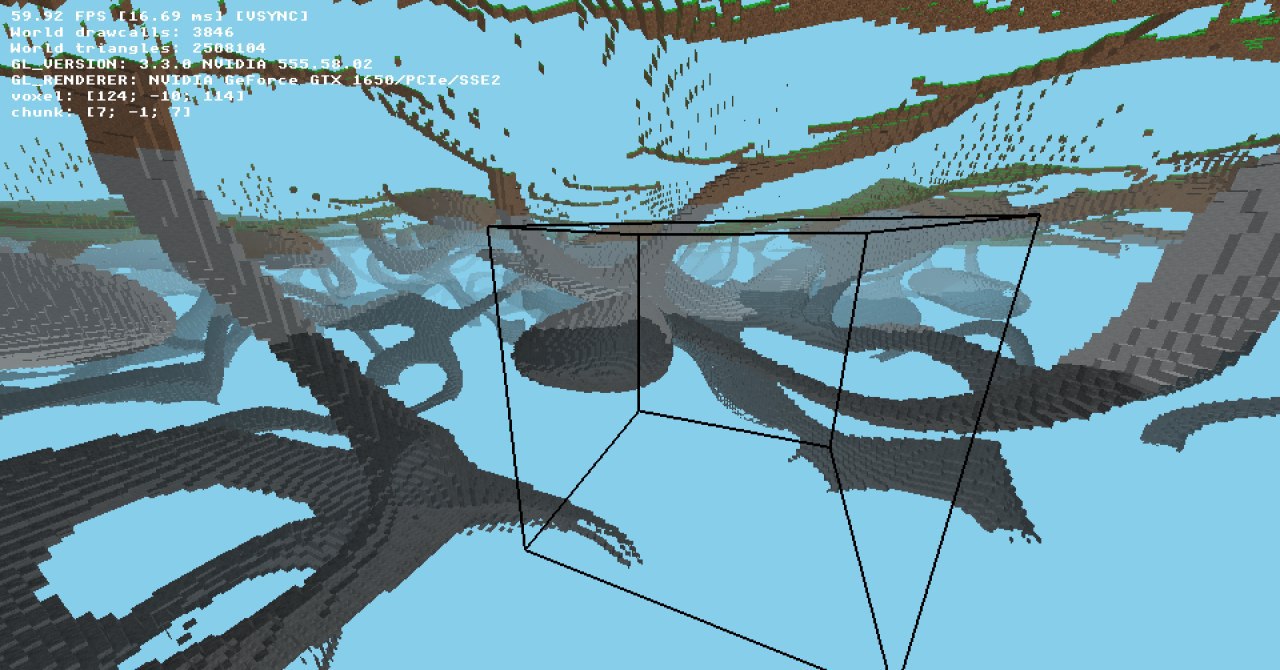
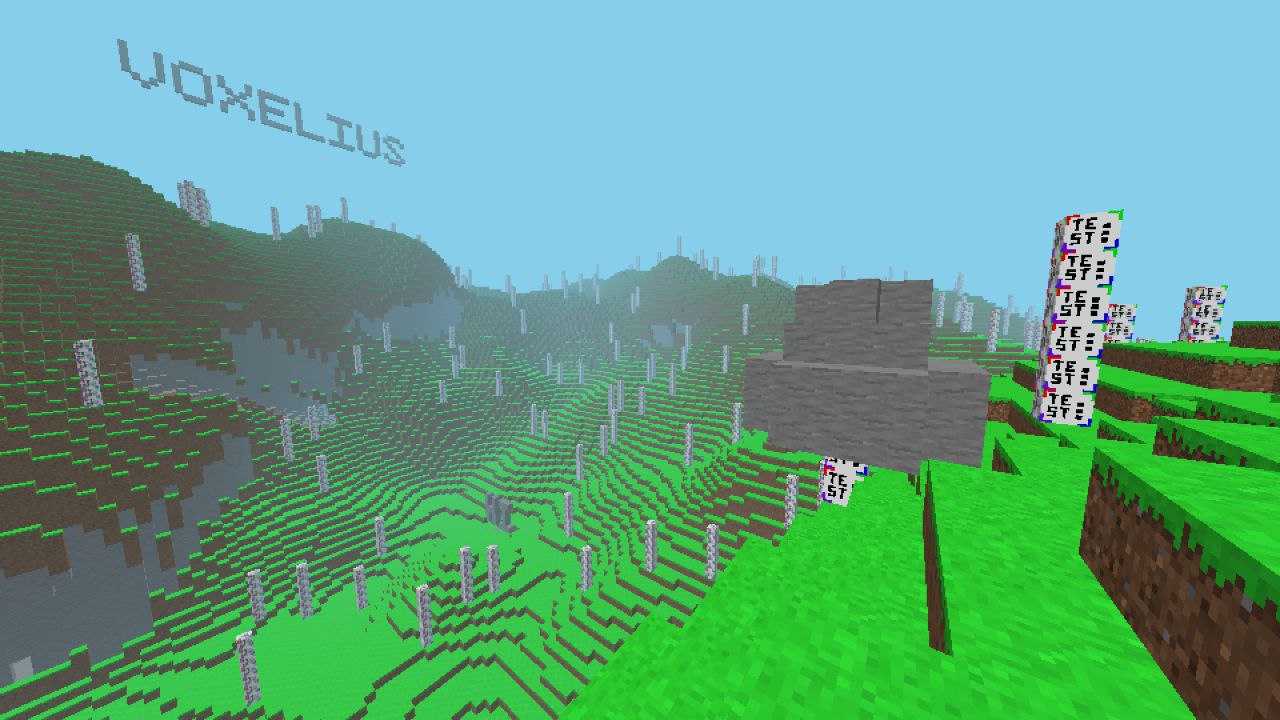
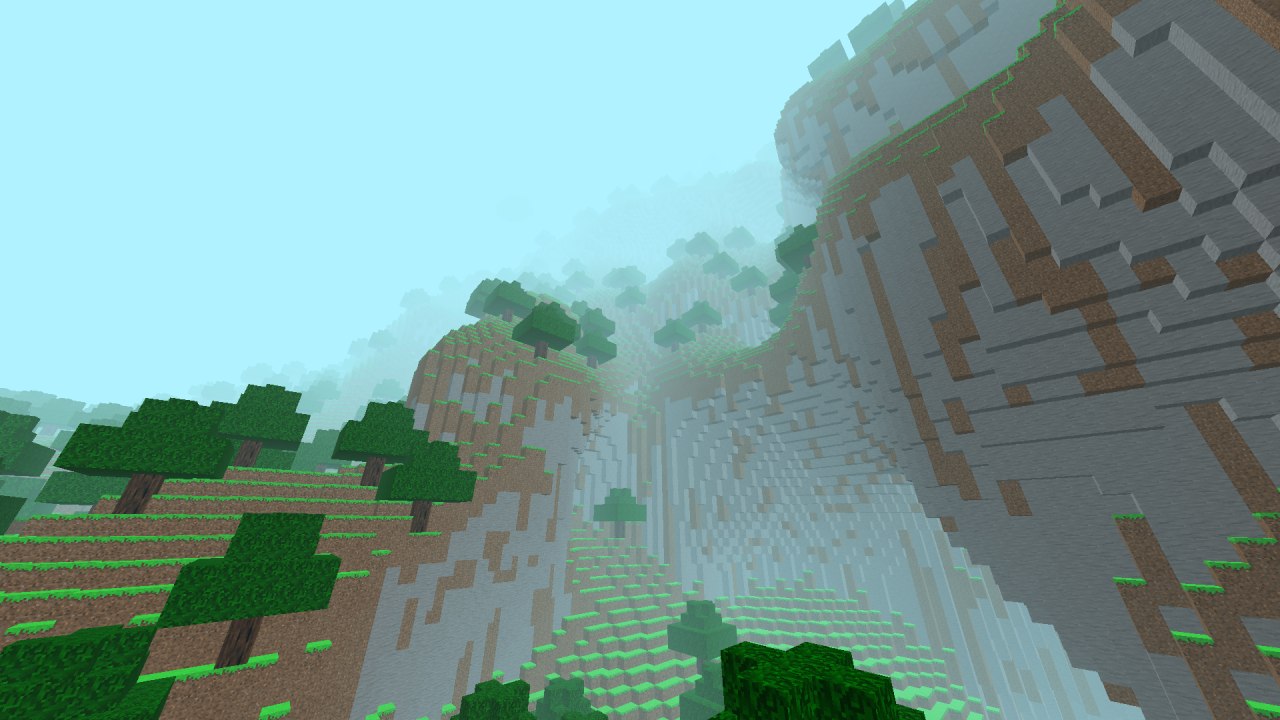
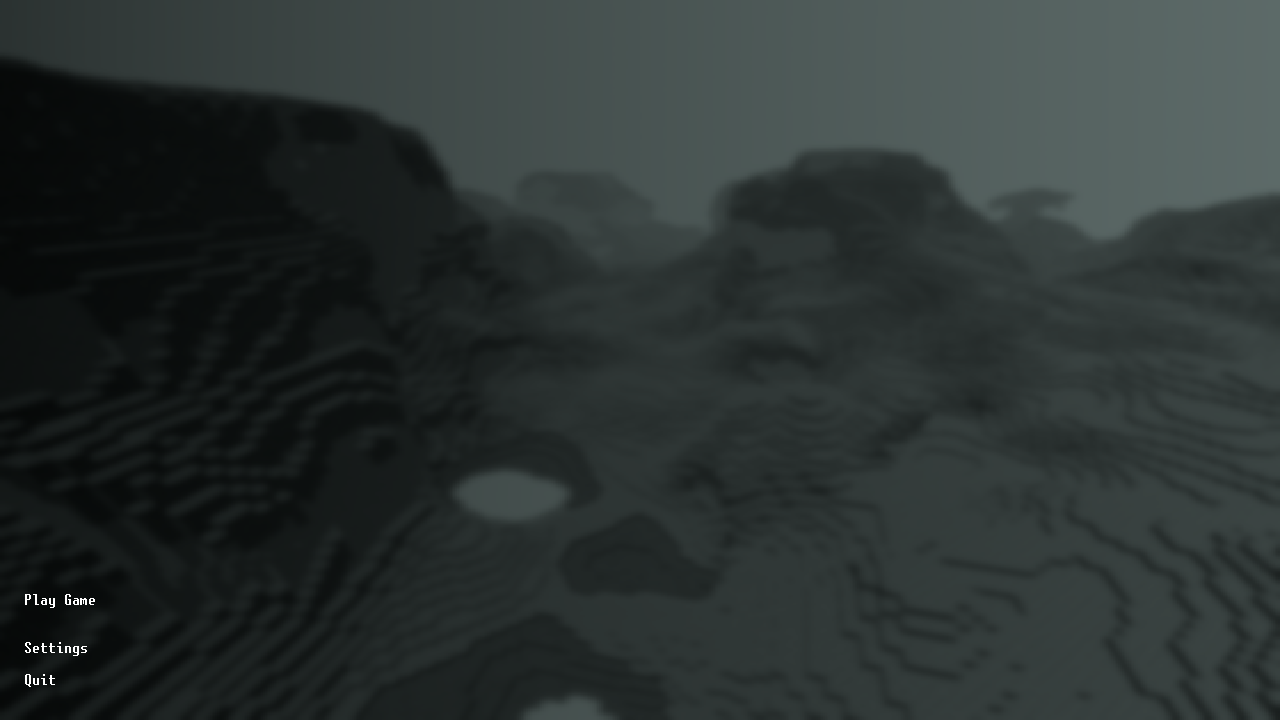
2026: QFengine
I got interested in SDL3's GPU API. It abstracts Vulkan, Metal, and D3D12 and acts like a lower-level OpenGL. Out of that came an attempt at a quake-like engine (I still want to get back to it later). It looks like this:
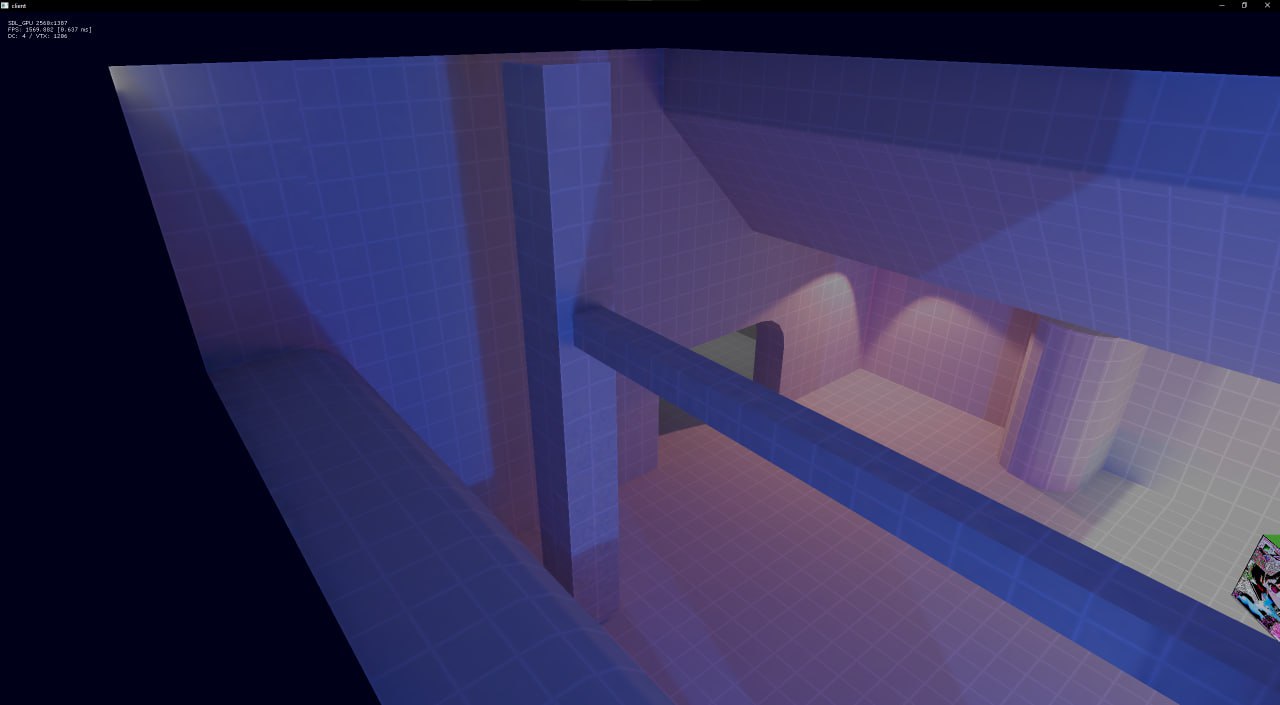
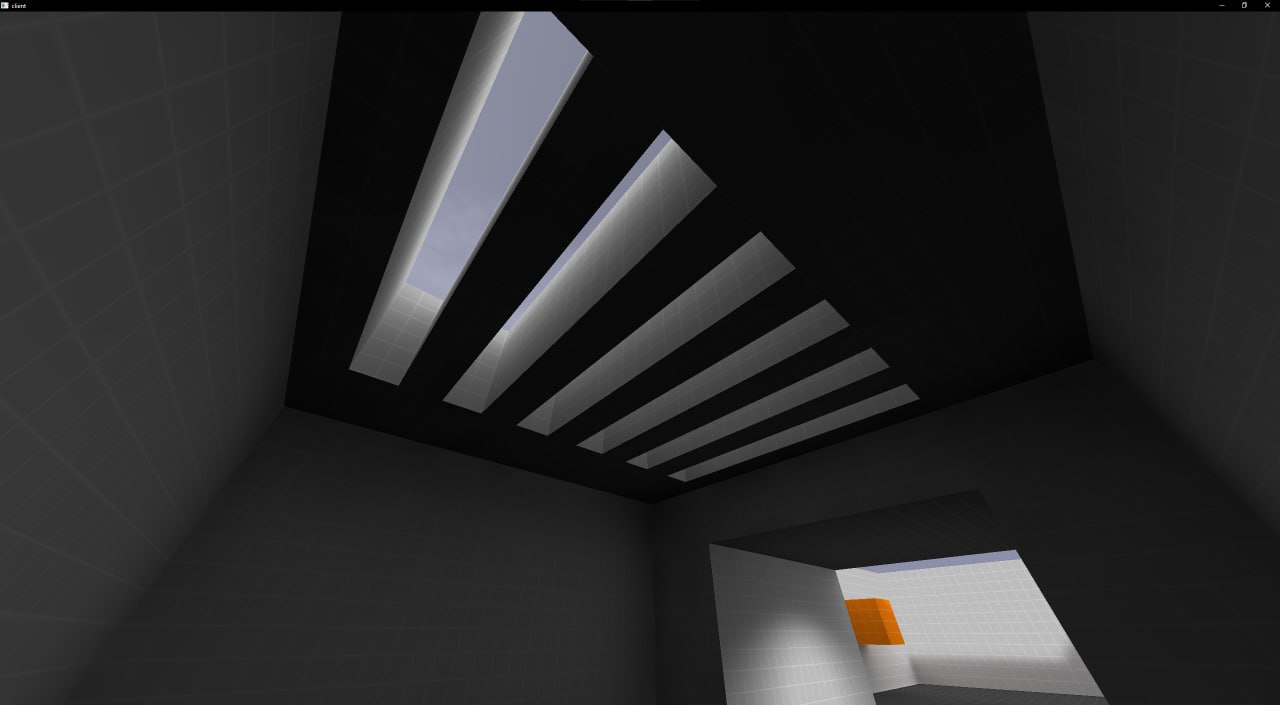
While doing that I figured out practices that made the source tree much better organized. Bringing those into Voxelius was an obvious next step. However...
2026: the third rewrite
The current public version of Voxelius leans hard on libraries and tools I no longer use. Examples: GLM (I use Eigen now), spdlog (I use my own simpler logging library from a work project), GLFW (I use SDL3 now). The list goes on. A straight port of the old code onto the new stack is not feasible.
I also wanted password-less player authentication. I already had a sort-of test project for Ed25519 auth called Prospero, and I want to reuse that approach in Voxelius.
Finally, I want the rewrite to follow ideas from the core inspiration, OpenBuilder and Minetest/Luanti (or whatever they rename it to in two years). Game content should be defined through Lua, while core gameplay and world generation stay in C++.